
7 September 2025
How to Feed Frozen Food in a Reef Tank
Learn how to feed frozen food in a reef tank with less waste, better access for shy fish and a cleaner, more controlled feeding routine.
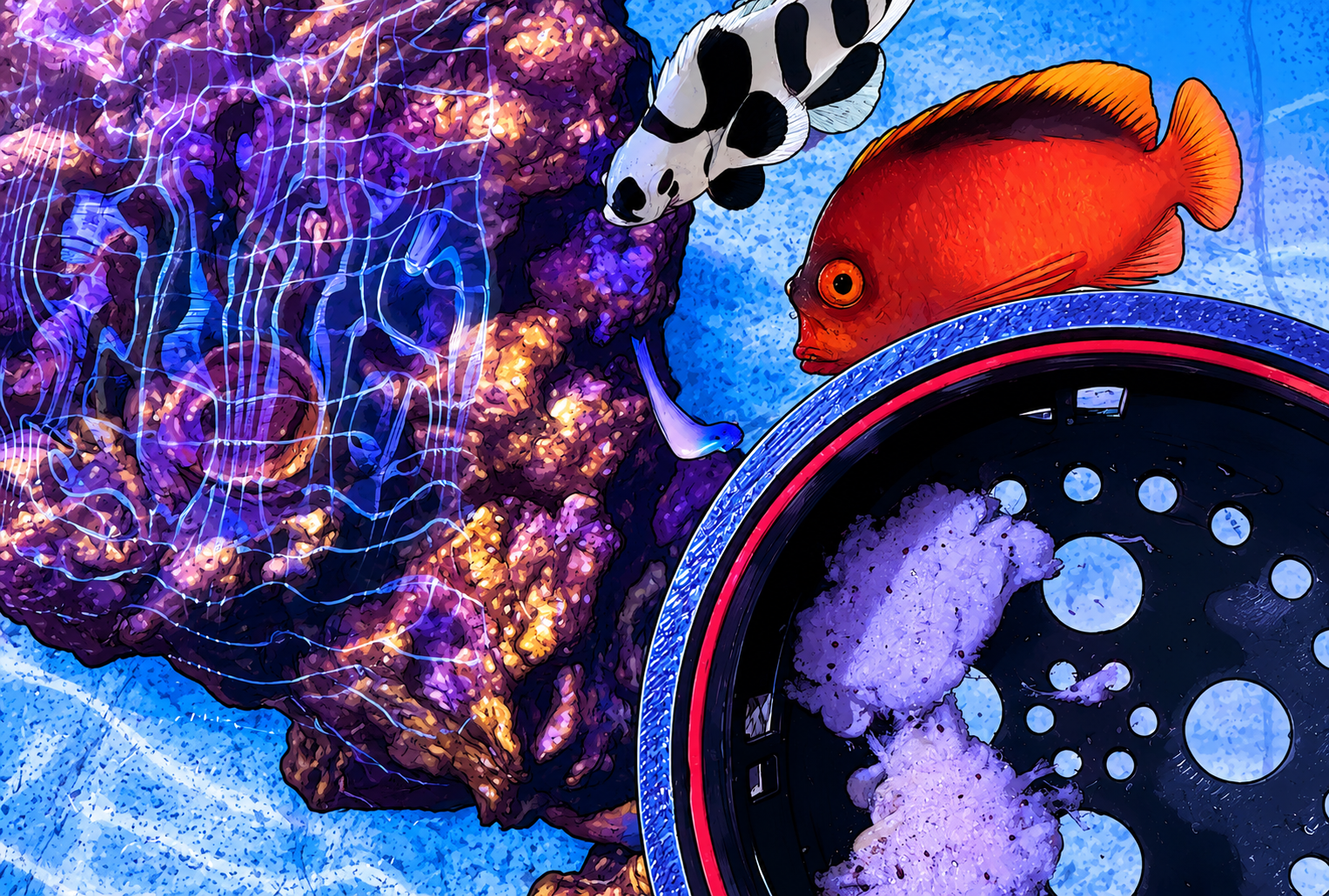
The Problem with Traditional Frozen Feeding
If you've kept a reef tank for any length of time, you know the drill: thaw a cube of frozen food, squirt it into the tank, and watch the chaos unfold. Your wrasse goes ballistic, your clowns dart around snatching everything they can, and your shy fish — the ones that actually need the food — get nothing.
Then there's the waste. Half the food gets sucked into your overflow or settles into the rockwork where it rots, spiking nitrates and phosphates. You end up feeding more to compensate, which just makes the problem worse.
A Smarter Approach: Controlled Release
What if you could slow everything down? Instead of dumping food into the water column all at once, imagine a system that releases frozen food gradually — giving every fish a fair go at feeding time.
That's exactly what we designed Neptune's Bounty to do. It's a 3D-printed frozen food feeder that holds your frozen cube and lets it thaw slowly, dispensing food in a controlled stream rather than all at once.
How It Works
- Load a frozen cube into the feeder chamber.
- Place it in your tank using the selected magnetic or suction-cup mount.
- The food thaws gradually, releasing small amounts through the mesh openings over several minutes.
- All your fish get a chance to eat — even the timid ones hiding at the back.
The Benefits
- Less waste — food is consumed as it's released rather than sinking and rotting.
- Better nutrition distribution — shy fish and bottom-dwellers actually get fed.
- Cleaner water — less uneaten food means lower nutrient levels.
- More natural feeding — mimics the gradual food availability in the wild.
Tips for Best Results
For the best experience with controlled-release feeding, try these tips:
- Turn off your return pump or wavemakers for a few minutes so food doesn't get blown around the tank.
- Use a mix of frozen foods — mysis, brine shrimp, and reef blend all work well.
- Place the feeder near your shy fish's favourite hiding spot for the first few feeds so they learn where to go.
- Clean the feeder after each use — a quick rinse in RODI water is all it takes.
Made for Reef Keepers, by Reef Keepers
Neptune's Bounty was designed right here in Brisbane by people who deal with the same feeding frustrations you do. Every feeder is 3D-printed from reef-safe PETG filament — no leaching, no worries for your livestock.
Ready to upgrade feeding time? Grab Neptune's Bounty for your tank, or browse the full shop for more accessories.
Choosing a frozen food feeder
A manual frozen food feeder should suit the portions you use, the fish you keep and the available mounting position in your aquarium. Check the current product options for feeder size and choose a magnetic or suction-cup mount that is compatible with your tank.
Standard Reef Ahoy magnetic mounts are intended for aquarium glass up to 15 mm thick. If your aquarium has thicker panels, contact us before ordering.
Which frozen foods work?
Common frozen marine foods such as mysis, brine shrimp and blended reef foods may be suitable, but texture and particle size differ between brands. Watch the first few feeds to confirm the thawed food passes through the feeder openings at a useful rate. Do not force oversized or unusually firm food through the feeder.
How much frozen food should you feed?
There is no single portion that suits every reef tank. Start with an amount your livestock can consume during the feeding period, then adjust based on fish behaviour and uneaten food. Monitor nutrient trends and remove leftover food rather than adding more simply because some fish are slower to approach.
Temporarily reducing strong flow can keep released food near the feeding station, but whether this is appropriate depends on your aquarium. Restore normal circulation after feeding.
Manual feeders versus automatic feeders
Neptune's Bounty is a manual frozen food feeding station. You place a portion in it at feeding time and remove it for cleaning afterwards. It is not a refrigerated automatic feeder and is not intended to keep frozen food cold for unattended multi-day feeding.
Cleaning after feeding
Remove the feeder after use, rinse away food residue and clean the openings with a soft brush when required. Avoid household cleaning chemicals. Regular cleaning prevents old food and biofilm from restricting the release openings.
Compare available mounting and size options on the Neptune's Bounty product page, or browse all reef tank feeding tools.