
7 June 2026
How to Choose a Magnetic Frag Rack for Your Reef Tank
Compare frag rack size, mounting method, glass thickness, plug compatibility and placement before choosing a rack for your reef tank.
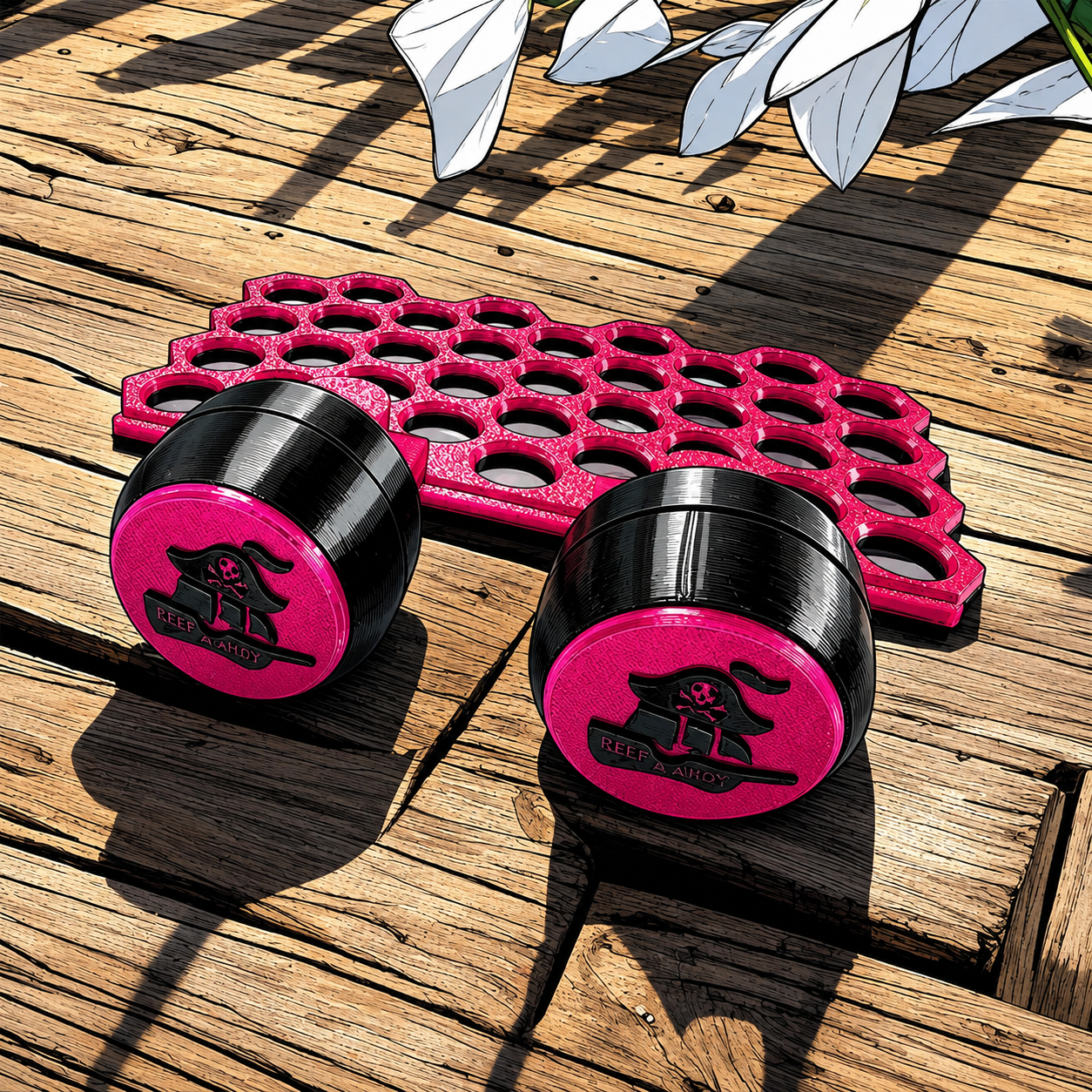
A coral frag rack gives newly purchased, healing or growing frags a defined position away from unstable rockwork and the sand bed. The right rack should fit the aquarium, hold the frag plugs you use and remain practical to move and clean.
This guide explains what to check before choosing a magnetic frag rack or suction-cup alternative. You can compare current Reef Ahoy models in our frag racks and accessories collection.
Start with the number of frags
Estimate how many frags you need to hold now, then allow reasonable space for new additions and coral growth. Filling every opening immediately may leave neighbouring corals too close together as they extend.
Capacity is only one part of the decision. A larger rack needs more clear glass, can affect access for cleaning and may place some frags in different light or flow conditions. Choose a rack that fits the usable area rather than simply selecting the greatest number of holes.
Coral Keep is available in medium and large variants with magnetic and suction-cup mounting options. Check the current product options before ordering.
Check aquarium glass thickness
Magnetic strength is affected by the distance between the wet-side rack and the dry-side magnet. Aquarium glass that is thicker than the mount was designed for can reduce holding force.
Reef Ahoy standard magnetic mounts are intended for aquarium glass up to 15 mm thick. Measure the actual panel where the rack will be installed, especially on tanks with different front, side or bracing thicknesses. Contact us before ordering for thicker panels or if the specification is uncertain.
Do not assume that a magnet rating from another product applies to every rack. Rack size, load and magnet configuration all matter.
Confirm frag plug compatibility
Frag plugs and discs are produced in different stem diameters, shapes and materials. Compare the plugs you use with the dimensions stated for the rack. A plug should sit securely without being forced into the opening.
Also consider the coral above the plug. Branching SPS, fleshy LPS and encrusting frags need different amounts of clearance. Leave enough space to reduce contact and make each frag accessible for inspection or removal.
Plan light, flow and clearance
A frag rack does not create suitable coral placement by itself. Position still needs to match the requirements of the coral.
- Avoid placing a new frag directly into unsuitable high light without an appropriate acclimation process.
- Confirm that flow reaches the coral without repeatedly dislodging the plug.
- Leave clearance from pumps, overflows, lids, cleaning tools and nearby rockwork.
- Check that the dry-side magnet will not interfere with cabinetry or equipment outside the aquarium.
Observe the coral after placement and move it when its response indicates that the position is unsuitable.
Choose a practical mounting method
A magnetic rack can be repositioned from outside the aquarium and does not depend on a suction seal. It still needs compatible glass thickness and a clear position for the external magnet.
A suction-cup rack can suit clean, smooth glass and is straightforward to remove. Its holding performance depends on the condition of the cup and mounting surface, so both require regular inspection and cleaning.
For a detailed comparison, read Magnetic vs Suction-Cup Frag Racks.
Consider materials and construction
Reef Ahoy frag racks are 3D-printed in Brisbane using PETG selected for aquarium accessories. Magnetic models use encapsulated magnets so metal does not directly contact aquarium water.
Inspect any aquarium accessory before use. Do not use a magnetic component if its protective encapsulation is damaged. Learn more in our reef-safe materials guide.
Cleaning a frag rack
Detritus and algae can collect around openings and textured surfaces. Remove the rack periodically, rinse it and use a soft brush where needed. Avoid household cleaning chemicals.
Clean the aquarium glass before reinstalling the mount. Inspect suction cups, magnetic encapsulation and the rack body for wear or damage before returning it to the tank.
Frequently asked questions
What glass thickness can a Reef Ahoy magnetic frag rack support?
Standard Reef Ahoy magnetic mounts are intended for aquarium glass up to 15 mm thick. Measure the panel where the rack will be installed and contact Reef Ahoy before ordering for thicker glass.
Are magnetic frag racks safe in a reef tank?
Magnetic models use encapsulated magnets so metal does not directly contact aquarium water. Inspect the encapsulation before use and stop using the mount if its protective coating is damaged.
Will every frag plug fit the same rack?
No. Frag plug stems and discs vary in diameter and shape. Compare your plugs with the dimensions listed for the rack rather than assuming a universal fit.
Where should a coral frag rack be placed?
Place it where the corals receive suitable light and flow, with clearance from pumps, overflows, cleaning tools and neighbouring livestock. Placement should be adjusted to the needs and response of each coral.
How often should a frag rack be cleaned?
Clean it whenever algae, detritus or reduced mount contact becomes noticeable. Remove the rack, rinse it, use a soft brush if needed and inspect the mount before reinstalling it.